
Project structure
Give every stage, package, consultant scope and time-booking task its place.
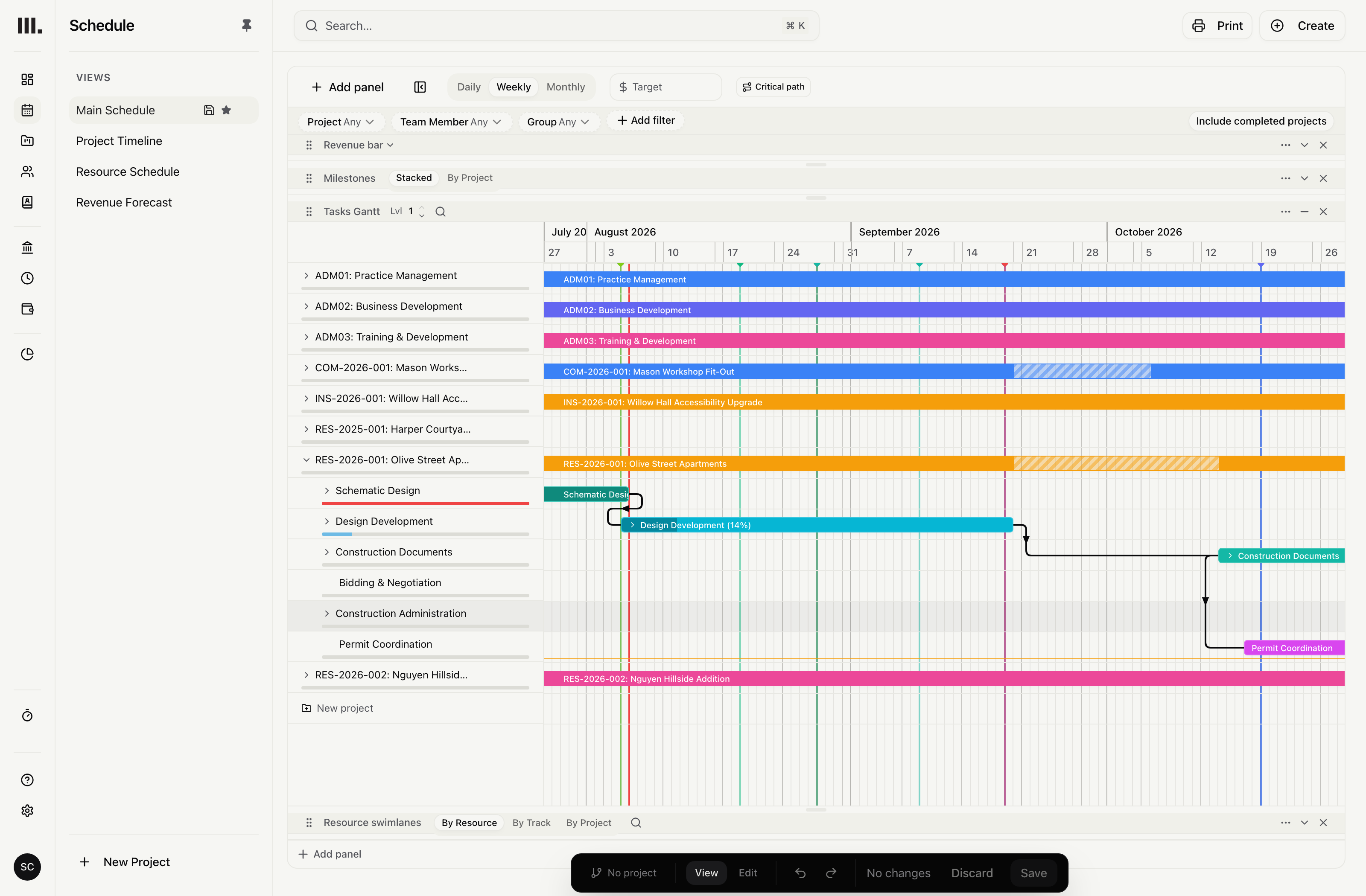
Start with a building or discipline, then nest delivery stages, consultant scopes and time-booking tasks in one hierarchy.
Keep stages, scopes and tasks intact.
Keep lobby, penthouse and standard-apartment packages together; carry each from concept design through documentation into contract administration.
Levels set by the job
Add the levels the project needs, from the overall stage through packages and scopes to the time-booking task.
Recorded time survives new versions
Logged hours stay with the task when you revise the project plan.
Stages and scopes give tasks context
Keep each task under the stage, package or consultant scope that explains why the work exists.
One structure carries dates, fees and hours.
Dates, fees and planned hours follow the same stages, packages and tasks, so each view still describes the same project.
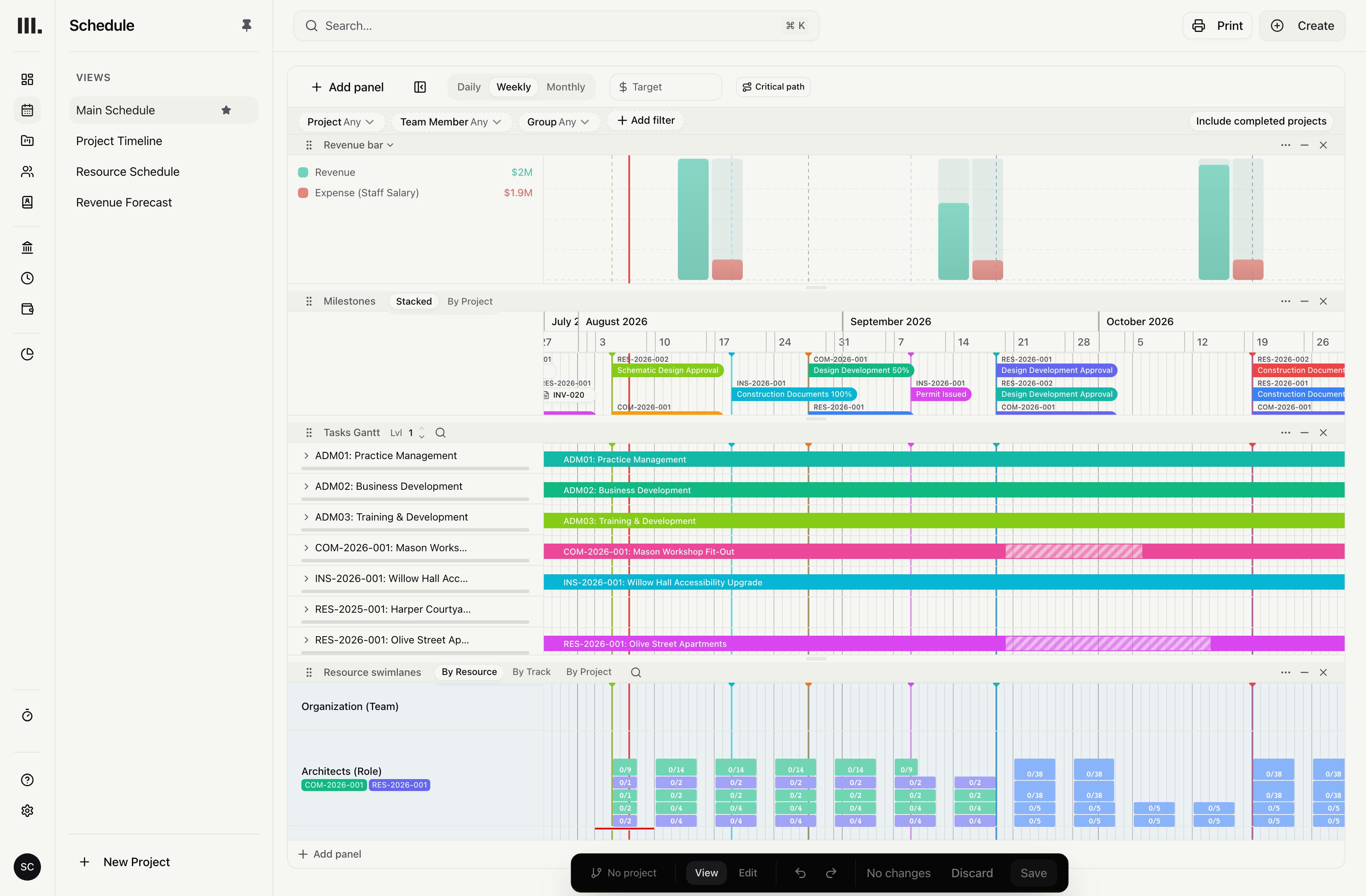
Schedule against the work
Keep date ranges on the stages, packages, scopes and tasks that the project team already recognises.
Fees total by task and phase
Place fees and costs where they belong, then review their totals at the task or parent phase.
Agreed plans stay on record
Preserve an agreed project snapshot as a named version or baseline while the working plan continues to change.
Scope changes stay named.
When the brief moves, add the fee and preserve the agreed and current plans as project versions or named baselines. The hierarchy keeps the change explicit.
Plan stages, scopes and milestones
Explore related capabilities
Each stage keeps its fee and people.
Book a demo to see how one project from your practice moves through Monument.